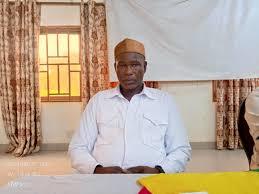

Afotey Quaye - MCE Krowor Municipality
Promised to tackle roads and improve on the sanitation situation in the municipality.
A 40-year old engineer, Paul Afotey Quaye, i. promised to tackle roads and improve on the sanitation situation in the municipality. the new Municipal Chief Executive (MCE) for the Krowor Municipality.
He has promised to tackle roads and improve on the sanitation situation in the municipality.
A 40-year old engineer, Paul Afotey Quaye, is the MCE for Krowor. He has promised to tackle roads and improve on the sanitation situation in the municipality.
About Krowor Municipal District
Krowor’s Path to Coastal Excellence: A Vision for Transformation by 2028
Krowor Municipal Assembly aims to transform its 15.6 km² coastal belt into Ghana’s cleanest, most economically vibrant city by 2028. Four flagship projects—the Teshie–Nungua Drainage Improvement, Korle-Gonno Market Sanitation Block, Street Lighting Expansion (Phase II), and the ICT-Based Revenue Management System—anchor this vision.
Together, they will bolster flood resilience, enhance public health and safety, and modernize revenue collection. These initiatives, alongside complementary health, education, environmental, and youth-empowerment programmes, will drive sustainable growth and equitable development across the municipality.
Municipal Profile
Krowor Municipal covers a 15.6 km² stretch along the Gulf of Guinea in Greater Accra, carved out of the former Tema West and Ledzokuku-Krowor districts. Its low-lying coastal topography makes it prone to seasonal floods, while dense settlement patterns pose unique infrastructure and service-delivery challenges.
With approximately 143,000 residents, 49.5 percent are under 24 years old and 50.5 percent are female. The Assembly’s governance rests on values of professionalism, transparency, participation, and environmental sustainability, guiding both strategic planning and day-to-day operations.
Flagship Projects
The Teshie–Nungua Drainage Improvement project aims to strengthen flood resilience for coastal communities by widening existing open channels and installing reinforced culverts at critical choke points. Scheduled for 2025 to 2026, the initiative is expected to reduce flood-related disruptions, protect road assets, and minimize erosion.
The Korle-Gonno Market Sanitation Block seeks to raise hygiene standards in the municipality’s busiest market. The project involves constructing a 12-stall public toilet block with hand-wash bays, wastewater containment, and an adjacent waste-collection yard. Set for 2025, it promises healthier conditions for traders and shoppers, improved refuse management, and a reduced risk of contamination.
The Street Lighting Expansion (Phase II) project is designed to improve nighttime safety and extend economic activity hours by installing 1,200 energy-efficient LED poles along main corridors, market approaches, and school zones. Slated for implementation between 2026 and 2027, it is expected to reduce petty crime, boost business operations at night, and increase pedestrian confidence.
The ICT-Based Revenue Management System aims to digitize and secure municipal revenue collection. The plan is to deploy e-payment kiosks at zonal offices and markets, connected to a real-time finance dashboard. This system, which will be rolled out from 2025 to 2028, is anticipated to minimize revenue leakages, shorten remittance cycles, and enable data-driven budgeting.
Complementary Initiatives
Beyond these flagship interventions, Krowor Municipal is investing in CHPS compound upgrades, basic school renovations, community waste-segregation campaigns, and youth skills training. These projects ensure that improvements in health, education, environment, and economic empowerment advance hand-in-hand.
Impact and Next Steps
The Teshie–Nungua Drainage Improvement, scheduled for 2025–2026, will enhance flood control and protect road infrastructure. The Korle-Gonno Market Sanitation Block, set for 2025, will improve public health and market hygiene. The Street Lighting Expansion (Phase II), planned for 2026–2027, will ensure greater nighttime safety and extended commercial activity. The ICT-Based Revenue Management System, to be implemented between 2025 and 2028, will deliver transparent and efficient municipal revenue collection.
Stakeholder engagement will include community forums, trader associations, and youth groups to gather input and foster ownership. A dedicated monitoring and evaluation framework—with quarterly milestones, performance indicators, and third-party audits—will track progress and ensure accountability.
Conclusion
By weaving together infrastructure upgrades, public-health interventions, safety enhancements, and digital governance, the Assembly is charting a path to a cleaner, safer, and more prosperous coastal municipality. As these projects roll out, Krowor moves steadily closer to its vision of becoming Ghana’s model coastal city.
Paul Afotey Quaye is the MCE for the area

Leave a comment
Your email address will not be published. Required fields are marked *