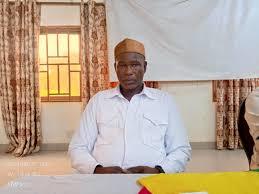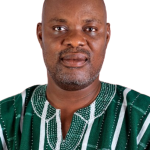

Hon. Dr. Sam Issaka Suraj, District Chief Executive - Kadjebi Municipal District
Profile of DCE
The District Chief Executive, Dr. Sam Issaka Suraj, is a Research Scientist formerly with the Ghana Atomic Energy Commission. He also serves as the Oti Regional Director of Research and Innovation for the National Democratic Congress and previously held two consecutive terms as Assemblyman for the Mempeasem Electoral Area.
About Kadjebi Municipal District
Kadjebi District, located in the southern part of the Oti Region, is a dynamic administrative area with a rich cultural mosaic and strong agricultural foundations. Its capital, Kadjebi, serves as the district’s urban center and administrative hub.
The district was officially established in 1989 through Legislative Instrument 1465, having been carved out of the former Jasikan-Buem Local Council. Covering a land area of approximately 949 square kilometers, Kadjebi shares borders with Nkwanta South to the north, Jasikan to the south, Biakoye to the southwest, Krachi East to the northwest, and the Republic of Togo to the east. As of the 2021 census, the district’s population stands at 73,959, with a fairly balanced gender distribution.
Agriculture is the backbone of the local economy. The district boasts fertile forest ochrosol soils and a climate conducive to crop cultivation, with average temperatures around 25°C and annual rainfall between 1,400mm and 1,800mm. Major crops include cocoa, maize, cassava, rice, plantain, yam, and ginger, while livestock farming and aquaculture also show promising growth. The district’s rivers—Asukawkaw, Wawa, and Menu—offer potential for small-scale irrigation and eco-tourism development. Kadjebi is ethnically diverse, with Ewes forming the largest group, followed by Akans, Guans, Kotokolis, and other minority communities. The district has eight traditional areas, each led by a Paramount Chief, and maintains vibrant cultural practices and festivals.
Recent development efforts have focused on four key projects. The Agenda 111 Hospital Project is currently about 50% complete and aims to significantly improve healthcare delivery across the district. The Kadjebi Lorry Station is nearing completion and is expected to enhance transportation and commercial activity. A district-wide sanitation initiative is underway to address waste management challenges, including the construction of new public toilets and improved waste disposal systems. Additionally, the Assembly has launched consultations for the 2026–2029 Medium-Term Development Plan, engaging local stakeholders to shape future infrastructure, education, and economic priorities.
Known for his strategic planning and community engagement, Dr. Suraj has emphasized the importance of inclusive development and resource optimization. His leadership has been widely welcomed by residents and local leaders, who view him as a capable and experienced figure committed to advancing Kadjebi’s growth.
Kadjebi District, located in the southern part of the Oti Region, is a dynamic administrative area with a rich cultural mosaic and strong agricultural foundations. Its capital, Kadjebi, serves as the district’s urban center and administrative hub.
The district was officially established in 1989 through Legislative Instrument 1465, having been carved out of the former Jasikan-Buem Local Council. Covering a land area of approximately 949 square kilometers, Kadjebi shares borders with Nkwanta South to the north, Jasikan to the south, Biakoye to the southwest, Krachi East to the northwest, and the Republic of Togo to the east. As of the 2021 census, the district’s population stands at 73,959, with a fairly balanced gender distribution.
Agriculture is the backbone of the local economy. The district boasts fertile forest ochrosol soils and a climate conducive to crop cultivation, with average temperatures around 25°C and annual rainfall between 1,400mm and 1,800mm. Major crops include cocoa, maize, cassava, rice, plantain, yam, and ginger, while livestock farming and aquaculture also show promising growth. The district’s rivers—Asukawkaw, Wawa, and Menu—offer potential for small-scale irrigation and eco-tourism development. Kadjebi is ethnically diverse, with Ewes forming the largest group, followed by Akans, Guans, Kotokolis, and other minority communities. The district has eight traditional areas, each led by a Paramount Chief, and maintains vibrant cultural practices and festivals.
Recent development efforts have focused on four key projects. The Agenda 111 Hospital Project is currently about 50% complete and aims to significantly improve healthcare delivery across the district. The Kadjebi Lorry Station is nearing completion and is expected to enhance transportation and commercial activity. A district-wide sanitation initiative is underway to address waste management challenges, including the construction of new public toilets and improved waste disposal systems. Additionally, the Assembly has launched consultations for the 2026–2029 Medium-Term Development Plan, engaging local stakeholders to shape future infrastructure, education, and economic priorities.
Known for his strategic planning and community engagement, Dr. Suraj has emphasized the importance of inclusive development and resource optimization. His leadership has been widely welcomed by residents and local leaders, who view him as a capable and experienced figure committed to advancing Kadjebi’s growth.

Leave a comment
Your email address will not be published. Required fields are marked *