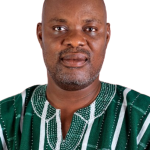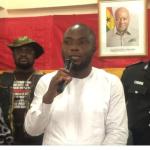
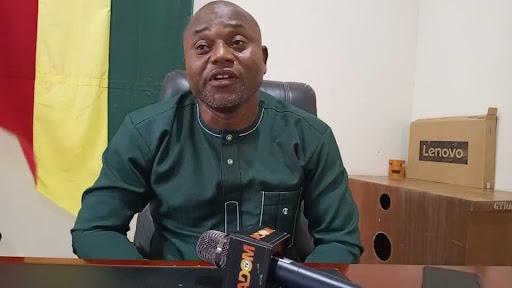
Hon. John Abugba Abaare,District Chief Executive-Garu Municipal District
At the helm of these initiatives is Hon. John Abugba Abaare, the current District Chief Executive. Since assuming office, he has prioritized transparency and accountability, particularly in the management of SOCO funds. In June 2025, he raised concerns over financial irregularities under the previous administration, citing inflated costs for basic items such as boreholes and youth activity gear. Despite these challenges, Hon. Abaare remains committed to leveraging the SOCO project to reduce poverty and promote inclusive development. He has called for a comprehensive audit to restore public trust and ensure that future projects deliver maximum value to the people of Garu.F
Garu Municipal District
Garu District, located in the southeastern corner of Ghana’s Upper East Region, was officially established in 2017 following the split of the former Garu-Tempane District. With Garu as its administrative capital, the district shares borders with Bawku Municipal to the north, Binduri to the northwest, Pusiga to the northeast, East Mamprusi to the southwest, Bunkpurugu Nyankpanduri to the southeast, Bawku West to the west, and the Republic of Togo to the east. Covering an area of approximately 1,060 square kilometers, Garu District has a population of 71,774 according to the 2021 census, with a slight female majority.
The district’s economy is predominantly agrarian, with most residents engaged in subsistence farming. Major crops include maize, millet, groundnuts, onions, and watermelon, while livestock such as pigs, cattle, sheep, goats, and guinea fowl are also reared. Despite its agricultural potential, Garu faces challenges such as poor road infrastructure, limited access to healthcare, and inadequate educational facilities. The district has eight market centers, including Garu, Farfar, Denugu, and Songo, which serve as hubs for local trade.
Among the district’s key development projects is the construction of a 60-bed hospital under the Agenda 111 initiative. As of late 2024, the hospital was 85% complete and expected to be commissioned by October 2025. This facility is set to significantly improve healthcare delivery across the district, which currently lacks a district hospital and relies on 34 smaller health facilities spread across seven sub-districts.
Another major intervention is the Gulf of Guinea Northern Regions Social Cohesion (SOCO) Project, which has funded the construction of classroom blocks, sanitary facilities, market stalls, and community information centers in Garu. Notable sites include the Garu District Health Management Team (DHMT) building near the Assembly and information centers in Denugu, Worikambo, and Dabila.
The district has also invested in sanitation infrastructure, including the construction of KVIP toilets at Garu Market and Zongo, and market stores in Zaari and Songo. In education, the Assembly procured 350 mono desks for schools and constructed three information centers to support community learning and engagement.

Leave a comment
Your email address will not be published. Required fields are marked *