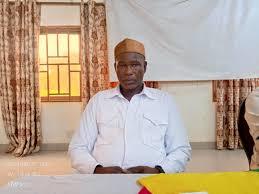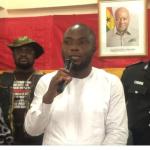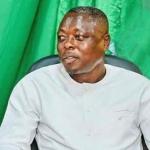

Hon. Joseph Abaah Akasake, District Chief Executive - Bongo Municipal District
Profile of DCE
At the helm of these transformative efforts is the District Chief Executive, Mr. Joseph Abaah Akasake. A dynamic and forward-thinking leader, Mr. Akansake has championed inclusive development and strategic partnerships to address the district’s pressing challenges. His administration has prioritized water and sanitation, earmarking 10 percent of the District Assembly Common Fund for WASH-related projects.
He has also advocated for the construction of a new district hospital to replace the overstretched existing facility and has called on development partners to support the district’s ambitious plans. Under his leadership, the Assembly has initiated efforts to complete abandoned classroom blocks, furnish schools, and enhance CHPS compounds with staff accommodation. Mr. Akansake’s collaborative approach and dedication to community empowerment have positioned Bongo as a model district for sustainable development in Ghana’s northern corridor.
About Bongo Municipal District
The Bongo District is a vibrant and historically rich area that has steadily evolved since its establishment by Legislative Instrument (LI) 1446 in 1988. With Bongo as its capital, the district spans approximately 459 square kilometers and shares borders with Burkina Faso to the north, Kassena-Nankana to the west, Bolgatanga to the south, and Nabdam to the southeast. The terrain is largely flat, punctuated by striking rock formations such as the Bongo Rocks, which not only serve as tourist attractions but also symbolize the district’s natural heritage.
The district lies within the Guinea Savannah Zone, though it borders on the Sudan Savannah, and faces environmental challenges including desertification and high fluoride levels in groundwater. Subsistence farming remains the predominant occupation, complemented by handicrafts and small-scale agro-processing. The population, estimated at over 120,000, is predominantly rural, with Gurene being the most widely spoken language.
In recent years, the Bongo District has witnessed a surge in development initiatives aimed at improving infrastructure, health, education, and sanitation. One of the most transformative projects is the GH¢2.5 million expansion of the Bongo Water Supply System, spearheaded by WaterAid Ghana in partnership with the Community Water and Sanitation Agency. This initiative mechanized two boreholes, constructed pump houses and standpipes, and laid nine kilometers of distribution pipelines, increasing daily water production from 20,000 to 116,000 litres. The project directly addresses the district’s chronic water scarcity and fluoride contamination, offering a lifeline to thousands of residents.
Another notable intervention is the provision of mechanised boreholes by the Public Utilities Regulatory Commission (PURC) to the Dua Junior High School and surrounding communities. With a 10,000-litre overhead tank and multiple dispensing points, this facility serves over 4,500 residents and has significantly improved hygiene and reduced absenteeism among students. The strategic placement of the boreholes within the school premises has fostered a culture of handwashing and ensured uninterrupted learning.
The SHARE project, implemented by WaterAid Ghana in collaboration with Right to Play and other partners, has revolutionized menstrual hygiene management in the district. Targeting adolescent girls in communities like Gowrie, the initiative introduced reusable sanitary pads and comprehensive education on menstrual health. This has led to a marked reduction in stigma and absenteeism, empowering young girls to participate fully in their education and community life.
Additionally, under the government’s One Million Dollar Per Constituency initiative, the Bongo District Assembly awarded contracts for five key projects, including the construction of a CHPS compound in Awaa, renovation of teachers’ quarters in Adaboya, and a three-unit classroom block in Lungo. These projects, valued at over GH¢1.9 million, reflect the Assembly’s commitment to improving health and education infrastructure across the district.

Leave a comment
Your email address will not be published. Required fields are marked *