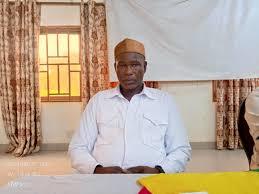
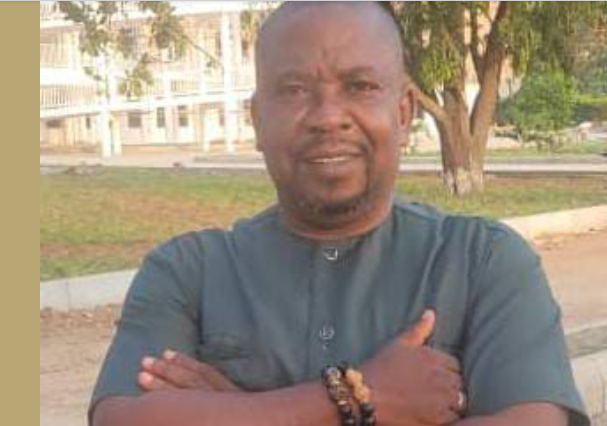
Hon. Francis Amankwah,District Chief Executive- Bia East Municipal District
DCE
At the helm of this transformation is Hon. Francis Amankwah, confirmed in March 2025 as the His administration has championed inclusive development, with a focus on infrastructure, sanitation, youth empowerment, and strategic agricultural investments.
About Bia East Municipal District
Bia East District, situated in the north-eastern corridor of Ghana’s Western North Region, has steadily emerged as a focal point for agricultural productivity, community resilience, and infrastructural renewal.
Created in June 2012 under Legislative Instrument 2014, the district has its administrative capital at Sefwi Adabokrom, a town that serves both as a commercial center and a growing beacon of grassroots development. Bordered by Dormaa West and Asunafo South to the north and east, Bia West to the west, and the Republic of Côte d’Ivoire to the south, the district covers an expanse of approximately 795 square kilometers and hosts a population of 53,073 according to the 2021 census. Notably, its annual growth rate of 4.3 percent exceeds both regional and national averages, indicative of a district that is gradually gaining social and economic traction.
The economic structure of Bia East is overwhelmingly agrarian, with cocoa farming serving as the linchpin of household income and district revenue. Farmers also cultivate food crops and vegetables, while livestock rearing remains a complementary source of livelihood. Despite its agricultural prominence, agro-processing facilities are limited, leaving much of the district’s raw produce without value addition.
Employment is largely concentrated within the private informal sector, which absorbs over 94 percent of the workforce, while the public formal sector and other categories make up the remaining fraction. Energy access has improved remarkably, with 94.3 percent of households connected to the national electricity grid, though pockets of the population still depend on rudimentary lighting methods such as flashlights and torches.
Infrastructure remains a development priority, especially road connectivity. The district boasts an estimated 300 kilometers of roads, of which a mere 27.1 kilometers are tarred. The launch of the District Road Improvement Programme (DRIP) in 2024 set the tone for revitalizing mobility and enhancing access to farming communities.
Earth-moving equipment has since been deployed to support rehabilitation efforts, boosting trade and reducing post-harvest losses. Beyond roads, attention is also being paid to health and education. The district is home to 21 health facilities that anchor local healthcare delivery, while literacy and digital inclusion initiatives aim to bridge educational gaps and promote ICT accessibility among students and teachers alike.
Traditional leaders across the district have lauded his leadership style, which emphasizes community engagement, transparency, and proactive problem-solving. Under Hon. Amankwah’s stewardship, sanitation efforts have been intensified through community-led initiatives and an expanded waste management framework, reflecting a renewed commitment to environmental health and sustainable living.
Bia East District stands at the intersection of promise and progress. With a dynamic leadership, fertile land, and a population eager to embrace innovation, the district is poised to unlock its full potential and contribute meaningfully to the broader regional development agenda. If sustained,

Leave a comment
Your email address will not be published. Required fields are marked *