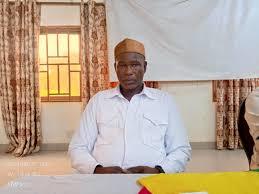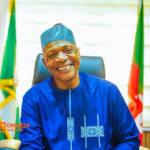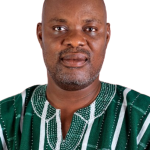

Hon. James Ayamweogo, Municipal Chief Executive - Bawku West Municipal District
Leadership profile
Under the leadership of Hon. James Ayamweogo, the District Assembly promotes participatory governance and human resource development. Its mission is to mobilize resources and implement inclusive policies through efficient local adninistration.
He has emphasized that his leadership style will be rooted in partnership, openness, and a shared vision with stakeholders.
Bawku West municipal District: Gateway to Inclusive Growth in Ghana’s Upper East
Located in Ghana’s Upper East Region, Bawku West District is a vibrant and culturally rich area that has steadily evolved since its establishment in 1988 under Legislative Instrument 1442. With Zebilla as its capital, the district shares borders with Burkina Faso to the north, Binduri District to the east, Talensi/Nabdam to the west, and East Mamprusi to the south. Covering approximately 1,070 square kilometers, it stands as one of the largest districts in the region.
The district is home to over 144,000 residents, with a slight majority being female. The Kusasi people form the dominant ethnic group, and Kusaal is widely spoken. Despite its cultural strength, the southern parts of the district face challenges such as high illiteracy rates, large household sizes, and elevated fertility levels, all of which shape the district’s development priorities.
Agriculture remains the backbone of the local economy, engaging more than 80 percent of the population. The fertile lands yield staple crops including millet, maize, rice, groundnuts, soybeans, and sweet potatoes. Livestock rearing is also prominent, with cattle, sheep, goats, pigs, donkeys, and poultry such as guinea fowls and ducks contributing to household incomes. Zebilla’s bustling market, held every three days, serves as a key economic hub, complemented by smaller markets in Binaba, Tanga, and Sapeliga.
The district’s terrain is mostly flat with gentle slopes, bordered by the White and Red Volta Rivers. Its Sudan savanna vegetation supports economic trees like dawadawa, sheanut, and baobab. However, environmental challenges such as soil erosion, bushfires, illegal mining, and deforestation threaten the sustainability of these natural resources.
Recent development efforts reflect a growing commitment to community well-being. The launch of the SOCO project, donations of delivery beds by World Vision Ghana to health facilities, and the activation of the Youth Parliament to address road safety concerns are just a few examples of progress in action.

Leave a comment
Your email address will not be published. Required fields are marked *