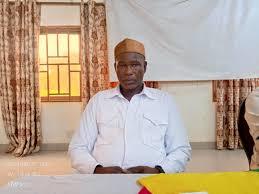

Hon. Samuel Oscar Mensah, District Chief Executive (DCE)- Agona East Municipal District
Profile of DCE
At the helm of the district’s development efforts is Hon. Samuel Oscar Mensah, the District Chief Executive (DCE). His leadership has focused on enhancing infrastructure, boosting revenue mobilization, and improving access to essential services. Upon assuming office, Hon. Mensah prioritized the repair of revenue collection vehicles and the establishment of collection points at Agona Duakwa and SWESCO, significantly improving the district’s Internally Generated Funds (IGF).
He has also championed sanitation reforms, aiming to position Agona East as one of the cleanest districts in the region.
Among the district’s flagship projects is the construction of a 24-hour market center, a multi-functional facility that will include a kindergarten, police station, fire station, clinic, fuel station, and banking services.
This initiative aligns with the national 24-hour economy policy and is expected to stimulate job creation and economic activity. In education, Hon. Mensah has overseen the distribution of 400 tables and chairs to schools facing overcrowding, while the MP for the area, Hon. Queenstar Maame Pokuaa Sawyer, has supported BECE candidates with mathematical sets and facilitated road rehabilitation along the Akim Oda–Swedru–Nsaba corridor.
Abount Agona East Municipal District
Agona East District, located in the northeastern part of Ghana’s Central Region, is a vibrant agrarian district with Agona Nsaba as its administrative capital. Established in 2008 through Legislative Instrument (LI) 1921, the district was carved out of the former Agona District, with the remaining portion becoming Agona West Municipal. Covering a land area of approximately 324 square kilometers, Agona East shares boundaries with Gomoa East and Agona West to the south, Birim Central and West Akim in the Eastern Region to the north, and Awutu Senya West to the east. As of the 2021 census, the district’s population stands at 98,324, with a slight female majority.
The district’s economy is predominantly agricultural, with cocoa, cassava, maize, oil palm, and citrus forming the backbone of local livelihoods. Fishing is also significant in communities like Agona Duakwa and Asafo, while small-scale agro-processing, trading, and animal husbandry contribute to household incomes. The district boasts fertile soils and a bi-modal rainfall pattern, supporting year-round crop cultivation and vegetable farming. Livestock production is steadily growing, with poultry, pigs, goats, and sheep being reared across various communities.
Agricultural development remains a priority, with ongoing projects such as the West Africa Agricultural Productivity Programme (WAAPP) and the Root and Tuber Improvement and Marketing Programme (RTIMP) aimed at multiplying high-yield cassava varieties. The district also benefits from the Export Marketing and Quality Assessment Project (EMQAP), which supports farmers in meeting export standards. Investment opportunities abound in agro-processing, aquaculture, snail farming, and apiculture, with flexible land tenure systems encouraging private sector participation.
Despite these strides, Agona East faces challenges including youth unemployment, environmental degradation from slash-and-burn farming and sand winning, and the need for expanded vocational training. Hon. Mensah’s administration continues to engage stakeholders, traditional leaders, and civil society organizations to address these issues and promote inclusive development.

Leave a comment
Your email address will not be published. Required fields are marked *