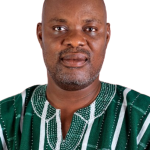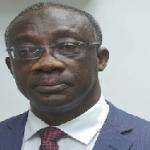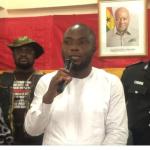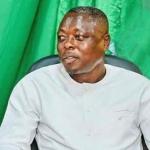
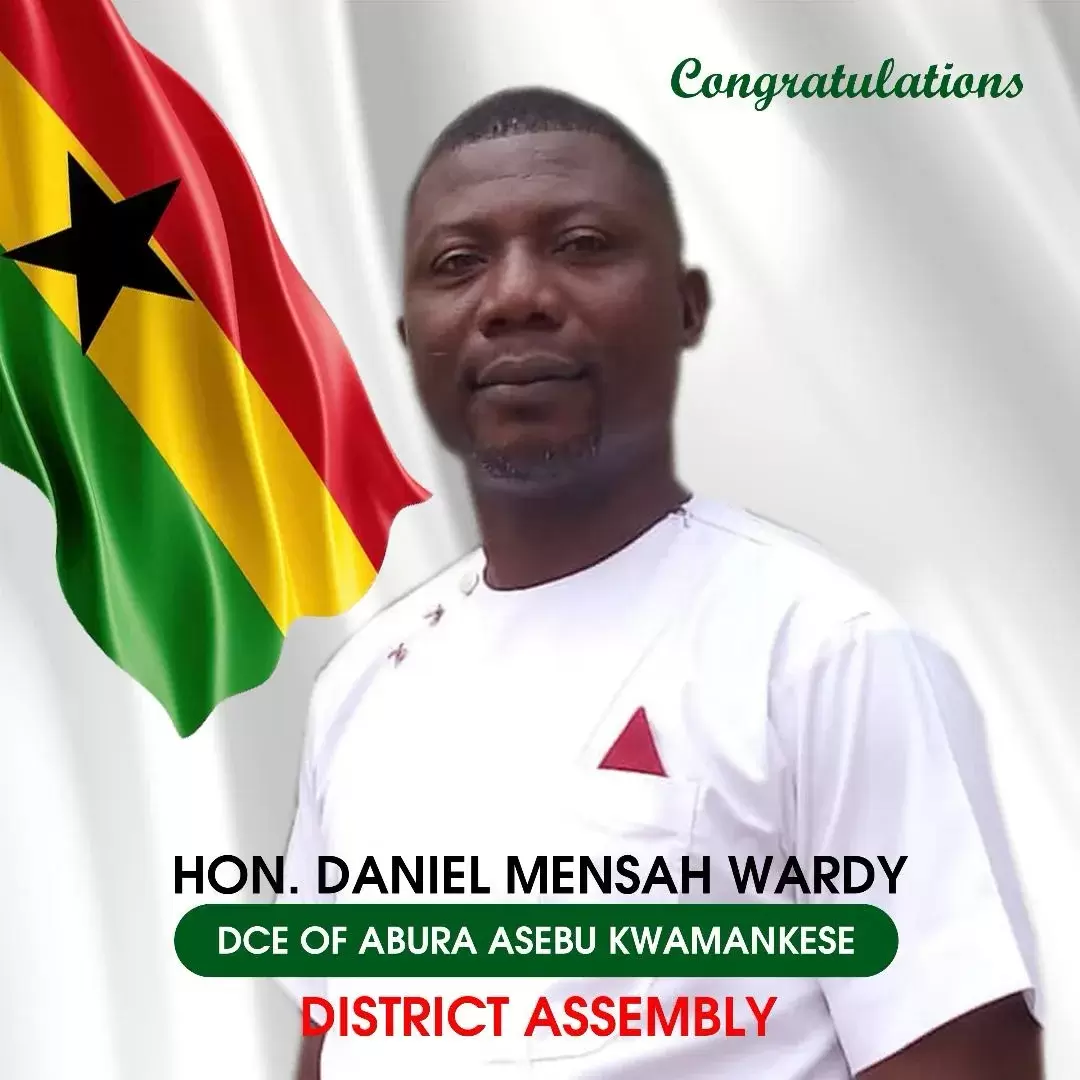
Hon. Daniel Mensah Wardy, District Chief Executive (DCE) -Abura/Asebu/Kwamankese District
Profile of DCE
At the forefront of the district’s development is Hon. Daniel Mensah Wardy, the District Chief Executive (DCE). His leadership emphasizes inclusive governance, infrastructure expansion, and improved access to essential services. Under his administration, the district is poised to see notable progress in health, education, water access, and road connectivity.
One of the district’s flagship health initiatives is the construction of a CHPS compound at Kwadeogya, which includes accommodation for nurses, a consulting room, and a labor ward. This facility replaces a previously inadequate structure and now serves as a vital healthcare center for the community. In the area of water and sanitation, the district has benefited from the drilling of two boreholes in Kojo Abem and Nsan, alongside the establishment of a limited mechanized water system at Abura Dunkwa Bungalow, improving access to potable water for over 500 residents.
Abura/Asebu/Kwamankese District,
Located in the southwestern part of Ghana’s Central Region, the Abura/Asebu/Kwamankese District is a historically rich and development-focused district with Abura Dunkwa as its administrative capital. Established in 1988 through Legislative Instrument (LI 1381), the district was carved out of the former Mfantsiman District Council and now spans approximately 394 square kilometers. It shares boundaries with Twifo-Heman-Lower Denkyira to the west, Assin South to the north, Mfantseman Municipal to the east, Cape Coast Metropolitan to the south, and a short coastal stretch along the Gulf of Guinea to the southeast. As of the 2021 census, the district’s population stands at 124,465, with a fairly balanced gender distribution.
The district’s economy is anchored in agriculture, fishing, and small-scale agro-processing. Cocoa, oil palm, citrus, cassava, and pineapple are widely cultivated, while communities like Moree are known for their vibrant marine fishing activities. The district also supports cottage industries and vocational training, with ongoing efforts to expand agro-processing and youth employment.
Road infrastructure has also received attention through the construction of drains and culverts in communities like Katakyiase and Brafoyaw. These projects have transformed previously flood-prone and unmotorable roads into safe, accessible routes, enhancing mobility and economic activity. Additionally, the district has invested in education through the construction of classroom blocks and KG facilities in schools such as Baiden Walker Experimental JHS and New Ebu Catholic School, providing conducive learning environments for children.
The district’s cultural heritage is equally vibrant, with festivals like Odumkwaa, Amoakyer Afahye, and Abangye celebrated annually across various communities. Tourist attractions such as Fort Nassau in Moree, the sacred rocks of Asebu, and the Monkey Sanctuary at Akesegua offer potential for eco-tourism and cultural preservation.
Despite these achievements, the district continues to face challenges including poor BECE performance, teenage pregnancy, and the need for expanded vocational training and industrial development. Hon. Wardy’s administration remains committed to addressing these issues through strategic partnerships, community engagement, and targeted interventions.

Leave a comment
Your email address will not be published. Required fields are marked *