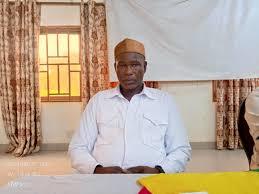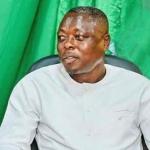

Hon. Naawulle Ireneous Basingbie, District Chief Executive - Lambussie-Karni Municipal District
DCE
Hon. Naawulle Ireneous Basingbie is the current District Chief Executive for Lambussie-Karni, confirmed in April 2025 with unanimous support from all 36 Assembly Members. A teacher by profession and former constituency secretary of the National Democratic Congress (NDC), he hails from Gbingaala in the Piina Zone.
His leadership is grounded in inclusive governance, grassroots engagement, and strategic development planning. In his acceptance speech, Hon. Basingbie pledged to prioritize education, health, agriculture, and infrastructure, while maintaining open-door policies and cross-sector collaboration. He has emphasized unity across political lines and called on stakeholders to actively participate in shaping the district’s future.
About Lambussie-Karni Municipal District
Lambussie-Karni District is located in the northwestern corner of Ghana’s Upper West Region, with Lambussie as its administrative capital. The district was officially established in 2008 through Legislative Instrument 1849, following its separation from the former Jirapa-Lambussie District.
It spans approximately 1,356.6 square kilometers and shares borders with Burkina Faso to the north, Lawra and Nandom Municipalities to the west, Jirapa Municipal to the south, and Sissala West District to the east. The district’s strategic location near the border positions it as a potential hub for cross-border trade, though it also faces challenges such as migration pressures and transboundary security concerns.
The population, as recorded in the 2021 census, stands at 51,118, with a predominantly rural demographic engaged in agriculture and petty trading. Major towns include Hamile, Samoa, Billaw, Piina, and Karni. The district’s landscape is generally flat and low-lying, with limited surface water sources, making small-scale irrigation and borehole development essential for dry-season farming and domestic use. The area is rich in shea, dawadawa, and neem trees, and has forest reserves in Lambussie, Nabaala, and Samoa, though these face threats from charcoal production and bush burning.
Several key development projects have been initiated. One major intervention is the construction of two irrigation dams in Lambussie and Piina No. 1, with rehabilitation works on the Karni dam. These projects, supported by the EU-Ghana Agricultural Programme, aim to create over 170 hectares of irrigable land and promote year-round farming.
Another significant initiative is the rehabilitation of feeder roads under the Transport Sector Improvement Project, which targets improved connectivity and reduced post-harvest losses. The Assembly has also invested in education infrastructure, including the construction of a 3-unit classroom block at Tapuma and a 6-seater water closet toilet with a mechanized borehole at Lambussie Senior High School. In the health sector, a community health post has been established at Kenkelen with support from the Government of Japan, enhancing access to primary healthcare services.

Leave a comment
Your email address will not be published. Required fields are marked *