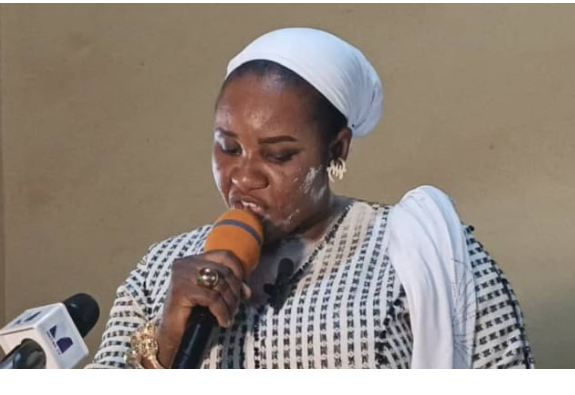
Hon. Siata Watara,Municipal Chief Executive - Jaman South Municipal District
MCE Profile
Leadership in Jaman South is currently under Hon. Siata Watara, who was confirmed as Municipal Chief Executive in April 2025 with 96.49 percent of Assembly Member votes. At age 35, she brings a strong academic background in political science and education, having previously served as a tutor at Drobo Senior High School. Hon. Watara also holds dual roles as the Bono Regional NDC Women’s Organiser and the Presiding Member of the Municipal Assembly. Her leadership reflects a commitment to inclusive governance, youth empowerment, and community-driven development. She has pledged to work collaboratively with stakeholders to accelerate infrastructure expansion, improve service delivery, and promote social cohesion across the municipality.
Jaman South Municipal District
Jaman South Municipal Assembly: A Profile of Growth, Heritage, and Inclusive Development
Jaman South Municipal Assembly, located in the western part of Ghana’s Bono Region, is a vibrant and historically rooted municipality with Drobo as its administrative capital. Originally part of the larger Jaman District created in 1989, it was restructured in 2003 to form Jaman North and South, and later elevated to municipal status in 2017. The municipality spans approximately 725 square kilometers and shares borders with Jaman North to the north, Berekum East to the southeast, Dormaa Central to the southwest, and Côte d’Ivoire to the west. According to the 2021 census, it has a population of 108,388, with a slightly higher female demographic.
The local economy is predominantly agrarian, with farming engaging over 61 percent of the labor force. Residents cultivate plantain, maize, cassava, cocoyam, vegetables, cocoa, and cashew. The municipality also hosts four major weekly markets—Drobo, Kwameseikrom, Zezera, and Atuna—which serve as commercial hubs for agricultural produce and goods. Financial services are provided by institutions such as Ghana Commercial Bank, Drobo Community Bank, and several rural banks, though access to credit remains a challenge for small-scale traders and farmers.
Infrastructure development has been a key focus in recent years. Notable projects include the construction of a new Assembly block, a police station at Drobo, and an AstroTurf pitch at Faaman to promote youth sports. Education infrastructure has expanded with multiple classroom blocks completed in communities such as Dodosuo, Kwameseikrom, Asare, Atuna, and Drobo SHS. Health facilities have also improved, with CHPS compounds established in Atuna, Kofiko, Konsia, and Abuokrom, alongside a maternity block at Dwenem and a health center at Mpuasu. Water and sanitation have seen significant upgrades through mechanized boreholes in Babianiha, Batea, Jenjemireja, and Tekesse, as well as public toilet facilities in Faaman, Dwenem, and Katakyiekrom. Market infrastructure has been enhanced with 72-unit stalls and 24 lockable stores at Drobo, supporting local commerce.
Let me know if you'd like this adapted into a publication-ready article or formatted for a stakeholder briefing. I can also help highlight zonal council priorities or specific initiatives under Hon. Watara’s tenure.

Leave a comment
Your email address will not be published. Required fields are marked *