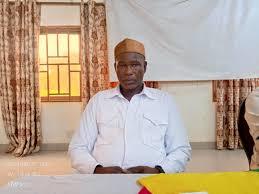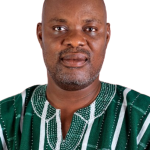
Mr Charles Appiah Kubi, District Chief Executive - Bosome Freho District
Leadership Profile
Mr Charles Appiah Kubi, nominated by the President for the role of District Chief Executive, was unanimously confirmed by all 29 Assembly Members at a ceremony held in Asiwa.
The event drew traditional leaders, department heads, political party executives, youth groups, and a large contingent of residents, who greeted the announcement with cheers and applause.
Mr Appiah Kubi expressed deep gratitude for the Assembly’s endorsement and pledged to pursue inclusive development. He vowed to improve education quality, enhance healthcare delivery, and create job opportunities across the district.
He underscored that his administration would prioritize unity, transparency, and open dialogue. An open-door policy, he assured, would ensure that every stakeholder—regardless of political affiliation—could engage directly with the district leadership.
Residents and community leaders have praised Mr Appiah Kubi’s humility and work ethic, noting that the spirit of unity displayed during the confirmation sets a strong foundation for effective local governance and sustainable development in Bosome Freho.
Bosome Freho District Profile
The Bosome Freho District lies in the southern part of Ghana’s Ashanti Region. Established in 2008 under Legislative Instrument 1852, it spans roughly 577–630 km² and is anchored by its capital town, Asiwa. Known for its rich natural resources and vibrant communities, the district pursues balanced growth across education, health, infrastructure, and local enterprise.
Location and Geography
Situated in the southern corridor of the Ashanti Region, Bosome Freho shares boundaries with Bosomtwe, Atwima Kwanwoma, Adansi South, Asante Akim South and North, and the Bekwai Municipal. Its terrain varies from low-lying plains to gentle hills, traversed by the Pra, Fre, Sunsu, and Anuru rivers, and bordered to the east by Lake Bosomtwe.
Natural Environment
Bosome Freho falls within the moist semi-deciduous forest zone. Underneath its verdant canopy lie Birimian and Tarkwaian rock formations, granite outcrops, and alluvial deposits of gold, sand, and gravel. The fertile soils support cocoa, oil palm, cassava, maize, vegetables, and a variety of tree crops that drive the district’s agrarian economy.
Climate and Agriculture
The district experiences two rainfall peaks in June and October, with annual totals between 1 600 mm and 2 160 mm. Temperatures range from 20 °C in August to 32 °C in March. Four main agricultural zones—Asiwa, Tebeso, Nsuta, and Mmorontuo—specialize in crop cultivation and livestock rearing, making agriculture the backbone of local livelihoods.
Demographics and Governance
As of the 2021 census, Bosome Freho is home to 62 259 residents. Governance is conducted through the Bosome Freho District Assembly, which consists of 21 electoral areas and 4 area councils. Traditional authorities and decentralized government departments collaborate under the leadership of the District Chief Executive and the Assembly Presiding Member to steer development and uphold community welfare.
Infrastructure and Services
Key public institutions include Bosome Senior High Technical School, Asiwa Health Centre, the District Magistrate Court, and the police station. Major development projects focus on expanding educational facilities, strengthening primary healthcare through CHPS compounds, upgrading road networks, and constructing market complexes to stimulate trade and entrepreneurship.

Leave a comment
Your email address will not be published. Required fields are marked *